
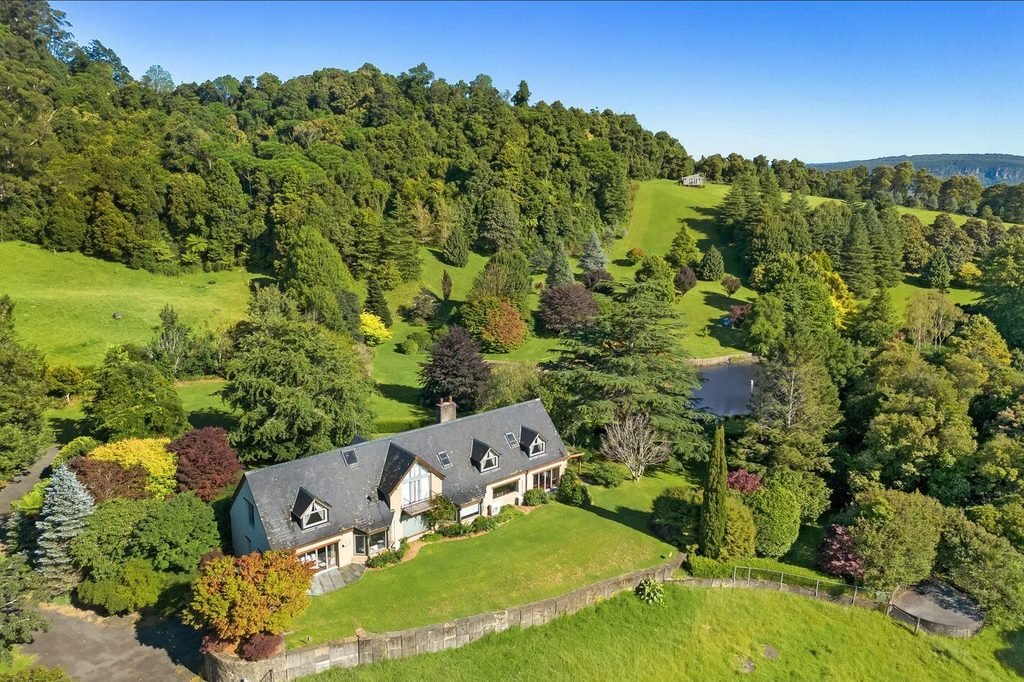
In our spheres, there is often a lot of pessimism. “You will never have a good wife”, “You will never have a good job”, “You will never own a house” etc. As a man in his 30’s who would historically be behind on many of these metrics (but about right for 2026), I understand. A lot of these things can appear hard to reach, and if it feels like the odds are stacked against you, they definitely are.
However, this article is not about complaining! The article will cover primarily the way one would buy a house, the steps to do it (both the required and highly recommended), as well as present some scenarios. The short version is that you can make it work. Yes, you won’t have it as easy as 60, or even 15 years ago. But you’re a man: in times of difficulty and struggle, you must thrive. Much like with finding a good wife (https://ausnatives.org/the-nativist-introduction-to-courtship/) you just need to find a way to make it work. That’s your role.
Some disclaimers to start: This is obviously not financial advice. It might not be financially viable or correct for you specifically to buy a house, due to your personal situation or whatever else. You could come up with better ways of making money than owning a house (though these is something unquestionably Nativist in owning a small part of the country that we love – a value beyond money).
I am an ordinary man that doesn’t work in Banking or Real Estate: I do not understand all of the numbers, guarantee that they are all correct, or intend to write every last detail of the home buying process. I do not have any particular interest in you buying a house or not, this is just something I was inspired to write for the Victorian Branch after my struggles in the process, because even though it’s possibly the most difficult purchase you’ll make in your life, it is surprisingly doable!
The General Process:
1) Determine your income and expenses (you should be doing this whether you’re a billionaire or a pauper anyway).
2) Determine your budget. This will include any bonuses you get from the government (such as a First Home Buyers Grant, the Help to Buy Scheme or similar). This will also include if you are fortunate enough to have relatives that will gift you the money (they have to sign a Statutory Declaration to confirm it’s a gift!). Make sure to include all the expenses in buying (I will go into more detail on this later).
3) Determine where you want to live… and then where you can live, as where you want is probably outside of your budget.
4) Determine who you want to live with. If you’re married, that’s an easy one. If you’re single, it needn’t be by yourself. You can buy a house with another person (I will go into more detail on this later). This can make buying a house otherwise outside of your budget very possible.
4.5) If applicable, form your collective (rules, percentage agreements etc) with your co-owner. This is too complex to go into detail on, I recommend looking into this yourself if you have a reliable friend or amenable relative.
5) Do a lot of research. You need to confirm everything I’ve written, and find anything I’ve missed or is outside of this scope. This is a big financial decision and you need to take it seriously. You need to check the area: employment, future development, and demographics – including (but not limited to) race (I’m sorry, I mean… Country of Origin https://www.sbs.com.au/news/article/how-multicultural-is-your-suburb/bq69vnf06). As Nativists, when moving house you should also consider where your brothers live (https://ausnatives.org/the-geographical-problem/)
5.5) New build, or established? Both have pros and cons (I will go into more detail on this later)
6) Determine what you want in the house. For example, a pool is a bad thing for me because I don’t want one, but I’ll have to maintain it and it will add to the buy cost, but for others it’s non-negotiable.
7) Get pre-approved (and apply for the Help to Buy scheme if applicable). This means finding a lender and finding out how much you can borrow
8) Inspect the property. There should be a lot of these, so you get an idea of what you’re looking for, and what isn’t important.
9) Organise a conveyancer (contract inspector) to go over the Section 32 (basically all of the relevant information on the house: this could be 100 pages long and full of ‘legalese’ and town planning). There are a lot of conveyancing companies around, and some banks offer the service: mine cost about $500 (which is comparatively cheap). You can also do this step along with the pest & building if you’re not confident in your offer.
10) Determine how much you would pay for the house, and then put in an offer.
11) If the offer is accepted, organise a pest and building inspection.
The costs of home ownership:
This will be broken up into two categories: before and after living at the property. At current rates in 2026 (in Victoria), you have for Before:
– Conveyancing: about $500-1000
– Building and pest inspection: about $500-1000
– Moving costs (assuming that you get help but still require a truck): about $500-1000
– Stamp Duty (it depends a lot on the property cost, but it’s 0 for your first home under $600,000)
– LMI (Lender’s Mortgage insurance: you can skip this with a good deposit)
After:
– Insurance: This could be it’s own section, but just for a brief analysis, you can expect to pay about $1500-$2000 a year for a typical first home. Insurance is a good idea when you have no idea when a pipe might burst, or hail might strike.
– Maintenance: Costs are impossible to generalise, but unlike renting, if the dishwasher breaks, it’s your responsibility to repair/replace it.
– Land tax: This also varies, but for a block with an assessed value of $350,000, a year’s land tax could be about $1,500.
Home-buying options:
– Buying outright/via the bank of Mum and Dad: Congratulations, you are doing great/very fortunate. Definitely give this a go if you have reasonably well off parents. Even a few $10k can be the difference between you being able to buy a house worth living in, or not.
– First Home Buyer Grant: this varies by state, so please check it out. In Victoria, it’s $10,000 for first home buyers in a new home.
– The 5% deposit scheme (https://firsthomebuyers.gov.au/australian-government-5-percent-deposit-scheme). This eliminates all LMI, and covers just about everything. This is a federal scheme, so it applies to everyone. If you have about $30,000 in cash (taking into account expense etc), you can buy a $500,000 home: sorted!
– The Help to Buy Scheme (https://firsthomebuyers.gov.au/australian-government-help-buy-scheme): This is a much more limited, but potentially extremely helpful scheme. There are 10,000 places available each year. This is something you have to apply for, and you can only go through two major banks currently (Commonwealth and Bank Australia). The government will contribute to (and own) a share of your new home: this is 30% for an established home, and 40% for a new build.
The bank puts forward an application for you, and they favour people perceived to be at a disadvantage. DINKs (Dual Income No Kids) are not favoured by this scheme as they’re pretty much the easiest demographic to buy a first home, so you’ll have to come up with a reason why they should include you in the scheme.
This can be done on as low as a 2% deposit: that means for a $500,000 house and land package, taking into account the $10,000 first home buyers grant, you could require as little as $10,000 saved in order to get the ball rolling.
Mortgage costs:
Renting can be quite expensive, though of course depending heavily on the area and what you’re getting. It could be quite possible to save a few hundred a month, on a house that you actually own and pay down, and (in normal times) passively increase the value of. So how much does an actual mortgage cost?
Using the calculator from https://www.realestate.com.au, let’s run through some examples:
A $500,000 home & 10% deposit of savings ($50,000) at a 6% interest rate on a typical 30 year loan: The repayments will be about $2770 a month. No LMI or stamp duty are required.
A $500,000 home & 10% deposit of savings ($50,000) at a 6% interest rate, but this time you’re using the Help to Buy Scheme. The HTB scheme will cover 30% of an established home, in this case $150,000. Add that to your cash deposit, and you have $200,000. The repayments are suddenly $1,807! This can be substantially lower than what you’re currently paying.
What if you have a family and need a bigger place? In regional areas of Victoria, the HTB scheme is capped at $650,000. A new build increases the HTB share by 40%, which will make things all around much easier. In this case, let’s assume a cash deposit of only $40,000. Normally (if your loan was accepted) you’d have to pay something like $3736 a month in repayments: this is not financially viable for most people! You would also have to pay some stamp duty, although it would be minor. LMI would not apply due to the HTB scheme.
However, with the HTB contribution of 40% equalling $260,000, your total effective deposit goes up to $300,000, and your monthly repayments are now a much healthier $2,177! The downside here is that many stories arise of difficulties with the HTB scheme and new builds specifically, so make sure that you have a significant buffer in case of difficulties. For example, don’t agree on a new build price of $645,000 regionally, because if this blows out past $650,000, you may have deeper problems than just some extra money.
It is of course always worth remembering that there are other costs: land tax, maintenance, and insurance to name some of the big ones. But overall, it still may be less than renting, and longer term is typically a wiser financial decision. Do your own research to confirm if this is true for you!
Managing Expectations:
So you might be thinking “That’s great, but where can I find a good place for $600k? That’s how much land alone costs where I live!” You will have to manage your expectations, and make sacrifices you probably don’t want to make. Don’t shoot the messenger, I didn’t make the economic situation that we find ourselves in. You need to make the most out of this situation. You might get a smaller place, with less bells and whistles, far out off where you would ideally like to live. The plus sides are that you:
A) Don’t need to live there forever
B) Don’t need to stay there all the time, and you can still visit the places that you really like
C) Can improve it, it’s your home!
Potential Locations:
You’ll have to do your research on this one as well. Where do you actually want to live? It requires a lot of thought, and planning for the future. I strongly recommend keeping in mind your support structures (family, friends, religious affiliations, and the ANA in whichever order suits you). I don’t recommend as a single man (or young family) buying a house in Bourke in NSW or St Arnaud in VIC “because it’s cheap”, and you have nobody around you, employment prospects are weak, and (if single) dating options are fewer. Even if you have a 100% Work From Home job, you will still face social isolation in every other way, and there is no guarantee that you will keep that job! If you lose your cushy desk job, you may be in an area where the only industries are ‘logging, the local petrol station, and 8th generation farming’, which is not ideal.
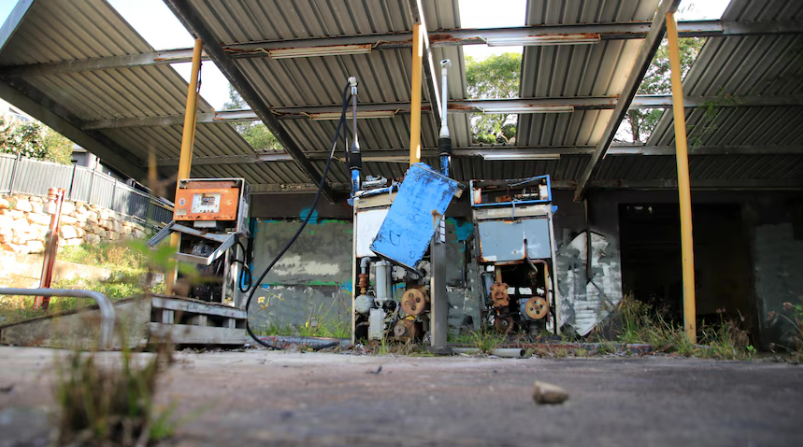
If your petrol station looks like this, it doesn’t matter much how ‘cheap’ the place is
Ideally, you would be within a commutable distance to your job (if you can transfer, that could be a good option), and close enough to everything else you like that you can still live a life that you enjoy. The actual distances depend on your tolerance. For example, if you think that a 30m drive in the car is really far, then you might have to get used to living in a proverbial shoe-box. If you find a 1h drive relaxing, then you can afford something nicer a bit further out (though petrol costs money over time too).
For example, Emerald in Victoria is a nice suburb. It has everything that most good Nativists would be happy with. It’s got stores, schools, as of writing in 2026 has reasonably good demographics, and is generally charming. The prices there aren’t too expensive compared to other parts of Melbourne (it is about a 60km drive into the CBD after all!), but if you can’t afford it, you could consider going east to Cockatoo. It’s only 7 minutes down the road, and has a bit less of the things that people normally like (generally speaking), and so it’s a bit cheaper. But if you’re heading west for work, it adds about 15 minutes travel time per day. This is small, but it adds up.
If Cockatoo is still too expensive, you might consider Gembrook instead. As Cockatoo is to Emerald, Gembrook is to Cockatoo (again, for the sake of argument). It’s another 8 minutes eastwards, which is a further 15 minute change per day. But, Gembrook may have a house that you can afford (and want to live in), while the other two might not. And Gembrook may still be ‘good enough’ for you. It’s your responsibility to consider what is ‘good enough’, nobody else can make that choice for you.
For young people without a strong deposit or a great salary, you’re probably either going to buy a small unit in the outer suburbs, or buy in the country. There are a few towns in the outskirts of the major cities that have a lot of good to be said for them. It’s hard to be more specific than that, due to wildly different situations that people searching for a home are in.
New versus Established:
They both have pros and cons. We have all heard lots of new build horror stories, and of course, they happen. But these are a minority of cases, and most issues are eventually fixed. Builders don’t want to do a bad job, and delays/budgeting issues are usually accidental or unforeseen. Established homes may have termites, cracked slabs or other hidden nasties, and you can’t twist any builder’s arm to fix them: it’s 100% on you. Buying a home at all is a risk.
However, these points are still worth considering:
New:
– You can modify house plans, and have whatever you want (budget permitting). It can be frustrating looking at 30+ established homes when they all have 1 or 2 things that you can’t stand, in an otherwise lovely home.
– In the HTB scheme, it’s an extra 10% of govt contribution.
– You can inspect (or have it inspected) every major milestone, doing your best to ensure quality.
– Newer usually means less initial maintenance. While some complain about the quality builds of homes, generally building standards have only gotten better, and a new heater is probably going to last longer than a 20 year old one.
Established:
– It’s ready to go now, you can move in tomorrow. The costs and time frames are set, and easy to understand. Even if you don’t love the landscaping or the paint in the kitchen, you can change those at your time frame and budget.
– It’s much less time consuming: you can get really caught up with analysis paralysis and research when building. If you find a house that is ‘good enough’, that is ideal!
– In a buyer’s market (like in 2026), you can (*can*) negotiate down an established home buyer more easily than a builder, who often has more fixed costs.
Note: I have not mentioned auctions. Auctions are not recommended. Like a casino, they are set up to benefit the sellers. If you’re a first home buyer, just filter those from your search.
Getting a Loan
How do you get a loan? Luckily for you, banks love lending money as that’s how they make money. You will pay them much more over the 30 years than they gave you, they’re not just being nice. Therefore, they want to compete with each other to get your business. One way that they compete is typically, they’re friendly and helpful and will explain the process (you can also go through a mortgage broker).
In short, the best ways of getting a loan are to have:
1) A reasonable deposit (don’t talk to them until you have at least several ten thousand of your own money saved up)
2) A job with a reasonable set wage (commission-based employment can struggle here, and so can minimum wage workers)
3) Been in that job/industry for a while (they don’t like people floating about as they’re seen as a default risk: nobody likes people defaulting)
4) Very little debt (even HECS debt will destroy your borrowing capacity, consider paying that off first)
Regarding a mortgage broker: they have a financial incentive to do the best job they can for you. They are paid a commission, but it doesn’t come (directly) from you: it gets paid by the banks. Look one up with good reviews and they can help you with the rest.
Conclusion
I really had to limit myself writing this article. There is so much that can be said and done. This was requested by members of the Victorian Branch: I primarily wanted to write something informative and helpful for my fellow Nativists, to counter some of the relentless negativity about buying a home, as well as to frame some of the ideas behind the search for a suitable home… and some of the complications involved that aren’t often mentioned.
As many people know, I am very keen on Intentional Communities, and believe that we can (and must) set one (or several) up in Australia. That will be covered in another upcoming article or podcast, but suffice to say that I believe that when buying a house, you should strongly be considering geographical proximity to other ANA members, and that you should even start considering how you can set yourself up for this future community.
Regardless, I hope that this article was helpful to you, and if you have any further questions, members know how to reach me!
Thomas M.
Governor – ANA Victoria
2026