
Cultural Capitulation can be understood in this context to mean when a group of people collectively (usually led from the top) decides to chip away at the foundations of what makes a culture recognisable and worthy of preservation, with a combination of short term thinking, a lack of awareness of the real issues that face your community, and an aversion to hard choices. This inevitably leads to getting swept away on the winds of modern movements, and eventually disappearing in any recognisable sense.
Let’s use an example to illustrate this. In Australia, traditionally the second culture (or third, counting the Irish) is the Scottish one, as the English had the single largest influence on what is ‘Australian’ and found it the easiest to assimilate, and due to lacking an easily recognisable individual ‘culture’ as we typically think of it today. The Scots contributed much in population, energy and culture to Australia since first settlement, and while there are very few Scots of Australian heritage that would consider themselves Scots first and Australians second (or even third, in the case of several immigrant groups present today), many of us have clung to various aspects of Scottish culture through the centuries. Yes, ‘us’: I am writing from personal experience. While certain things such as cattle raiding, haggis and clan feuds have gone, a canny sense of finance, love of whisky, and… remembering certain personal slights more than the average person! – have remained. For any Scottish Australians reading, I am of course speaking in a very general way in order to illustrate a point, so I must gloss over many things.
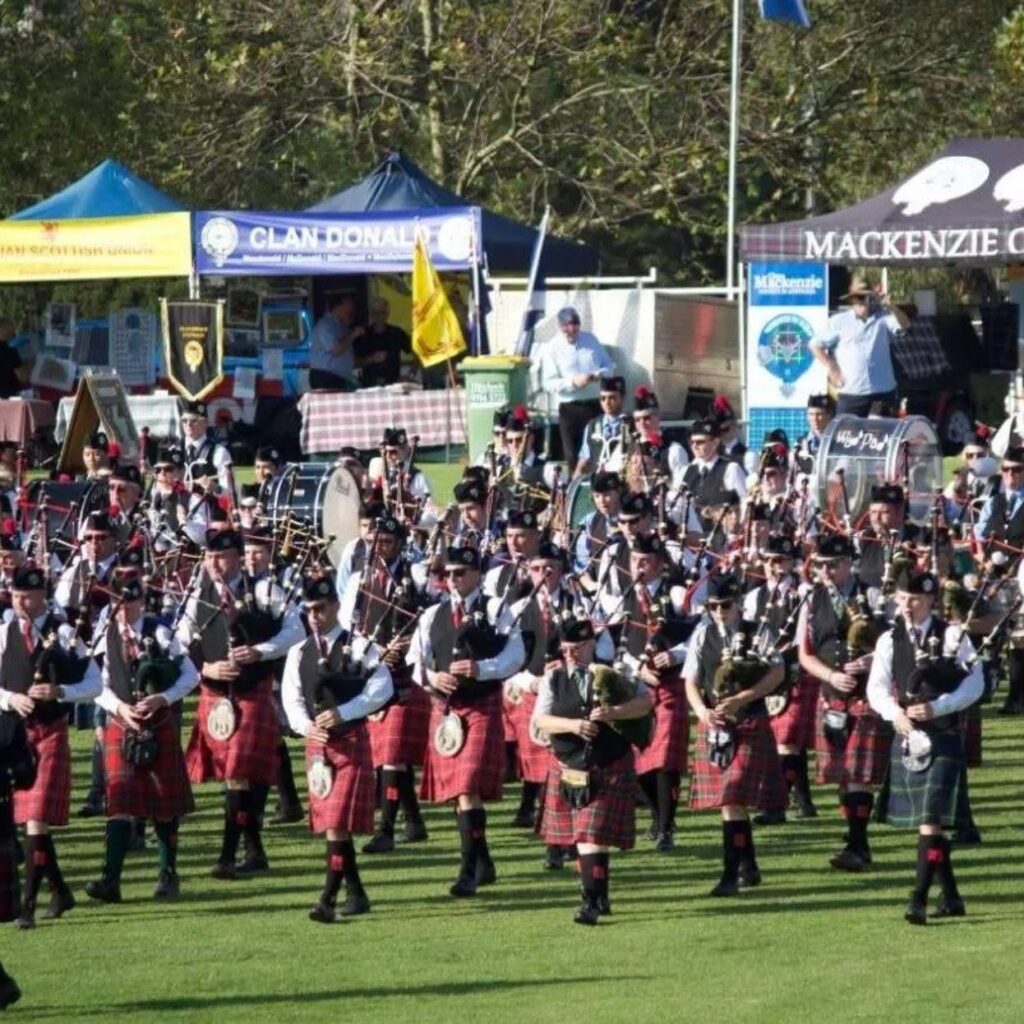
The pipes, the pipes are calling
The single biggest expression of Scottish culture is the Highland Games, in the same way that an Opera is the highest form of theatrical culture (combining acting, singing, music, set design, etc.). For those unaware, the Games typically contain dancing, bagpipes, the titular ‘heavy games’ (such as the caber toss, tug of war, etc.) semi-traditional foods, folk music such as fiddles and tin whistles, and so on. Traditionally, the Games started as a result of chieftains and kings selecting the best warriors for their household, and over time, the activities expanded into a general expression and enjoyment of culture. When run well, these are great fun, and well worth attending whether you have Scottish heritage or not (even if just for a visit) due to the energy present.
Now, one can expect cultural standards and expression to change over time, both out of legitimate cultural/change growth, as well as necessity. At the Highland Games, an example of cultural growth might be formalising the Highland Dancing while keeping the Ceilidh dances (like a bush/barn dance) casual. A change out of necessity might be abandoning the Heavy Games, and instead settling for a mere Highland Gathering due to public liability insurance being too high: you’ve been forced out of something not out of a desire for it, but because there is no other option. Once the finances are sorted, you return back to the ideal.
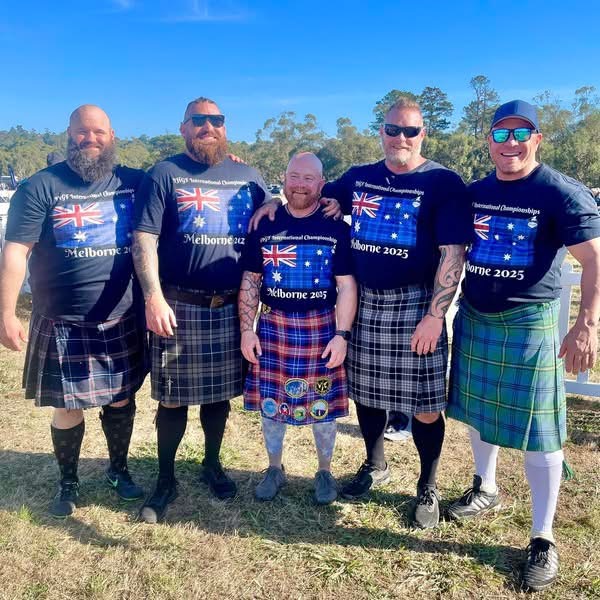
Just blokes being blokes
That said, here is where Cultural Capitulation comes in. To preface this argument, I must make very clear that I respect all the work that the organisers put into this festival, and appreciate what they have done in order to keep it running in a time when it is not easy or popular to do so. Various ethnic groups get massive funding, media puff pieces and support from (sometimes even federal!) political figures. Scots and most other European groups may not be repressed, but they are hardly supported.
Let’s use the recent example of the Melbourne Highland Games & Celtic Festival, which I recently attended. You have all of the regular things you would expect at a Games like this. Clan tents manned by those seeking to interest passers-by in their genealogy, shops selling Celtic themed clothing and jewellery, and the endless drone of bagpipes as the different teams prepare for their competitions.
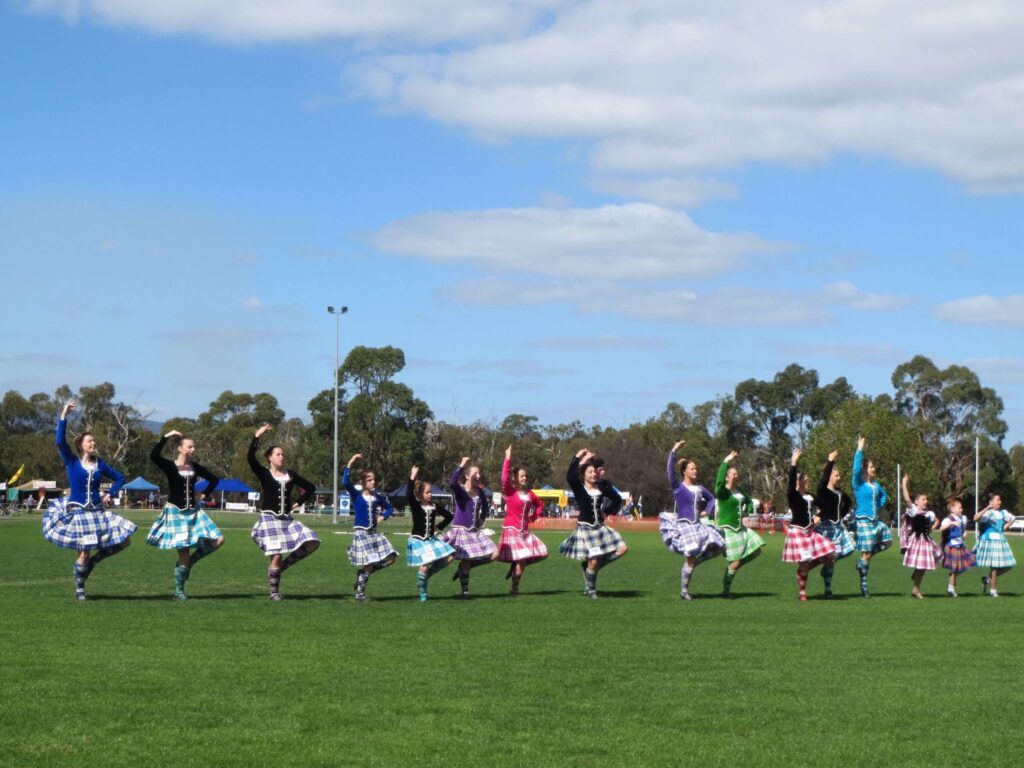
However, let’s inspect the name. More recently, it was the Ringwood Highland Games, one of several in Melbourne. As time has gone on, the various other Games have died off, leaving only this one: thus, the locational name change is a change out of necessity. But why ‘Celtic Festival’? Well, recently the decision was made to be more ‘inclusive’, and so invite other Celtic groups, particularly the Irish Australians. While the Irish and Scottish may be similar (particularly to outsiders), this is a clear capitulation. Not long afterwards, Morris Dancers were included: this dancing style is very much English, and definitively not Celtic.
Next, we have the inclusion of… Roman Legionaries! This has gone from being ‘inclusive’, to ‘clueless’, and now it is downright insulting. Not to harp on old grudges, as Scots do not typically feel strongly about this today (or bear ill will against Italians for this), but Rome at one stage of their attempted conquest of modern day Scotland in the 3rd century embarked on a campaign of genocide. Again, these reenactors were not just ‘Romans’, they were soldiers from the empire that attempted to wipe out our distant ancestors. Imagine if an enterprising bar mitzvah organiser had Roman soldiers from Trajan’s day give a performance, perhaps in re-enacting the looting of the Second Temple? This was in very poor taste, to say the least.
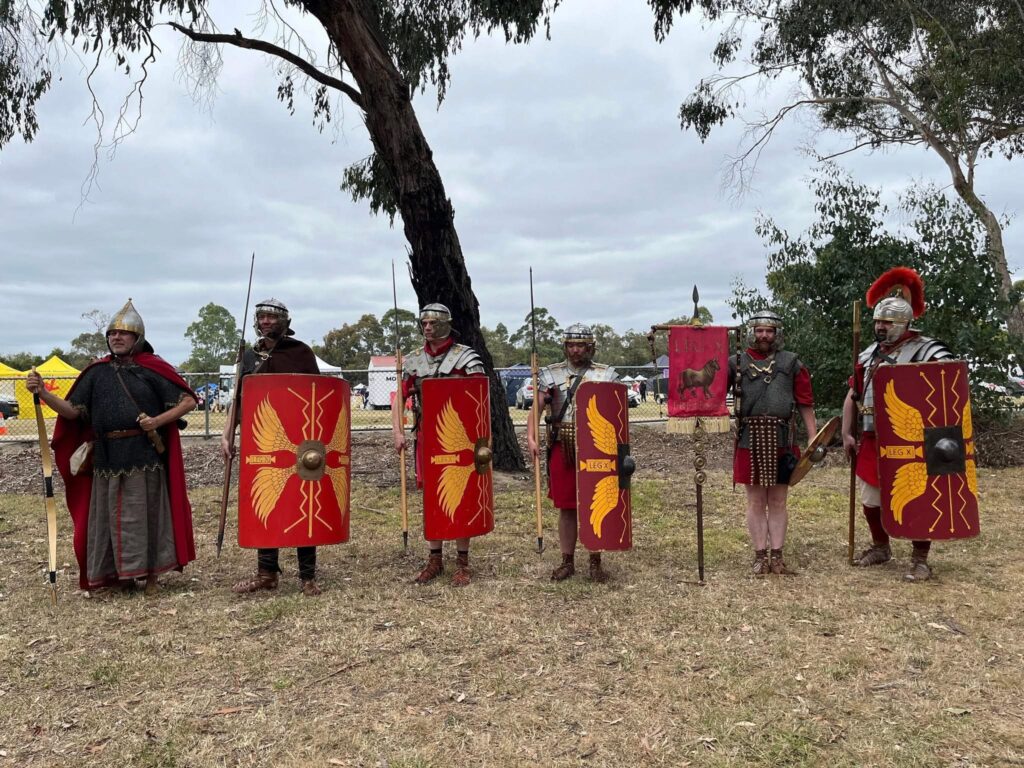
I don’t want to say ‘No True Scotsman’, but…
Then we have the dilution of the existing culture by the inclusion of foreign food stalls, and the capitulation to the demoralising and ridiculous ‘welcome to country’ movement. Now, you might say ‘well, traditional Scottish food isn’t much to write home about’, which is, admittedly, true. However, we didn’t eat nothing for centuries, waiting in anticipation of a Tikka Masala or Singapore Noodles! You can go one meal without these foreign foods, and it would be trivially easy for the organisers to avoid these sorts of foreign food trucks (staffed by foreign people) from coming. And avoiding the ‘welcome to country’ is as easy as… just not saying it.
Finally, there is the political capitulation. Far from an Albanese going to an Indian festival 1) in search of votes, 2) a show of support for their community, and 3) intending to increase ties with the diaspora in order to gain (apparently) favourable deals with their motherland, the Games were instead ‘graced’ with several stalls from political parties, representatives of which who often don’t even bother attending personally, instead leaving it to aides. One tent representing MP Sonja Terpstra was present, with a public display the visage of Communist revolutionary Che Guevera.
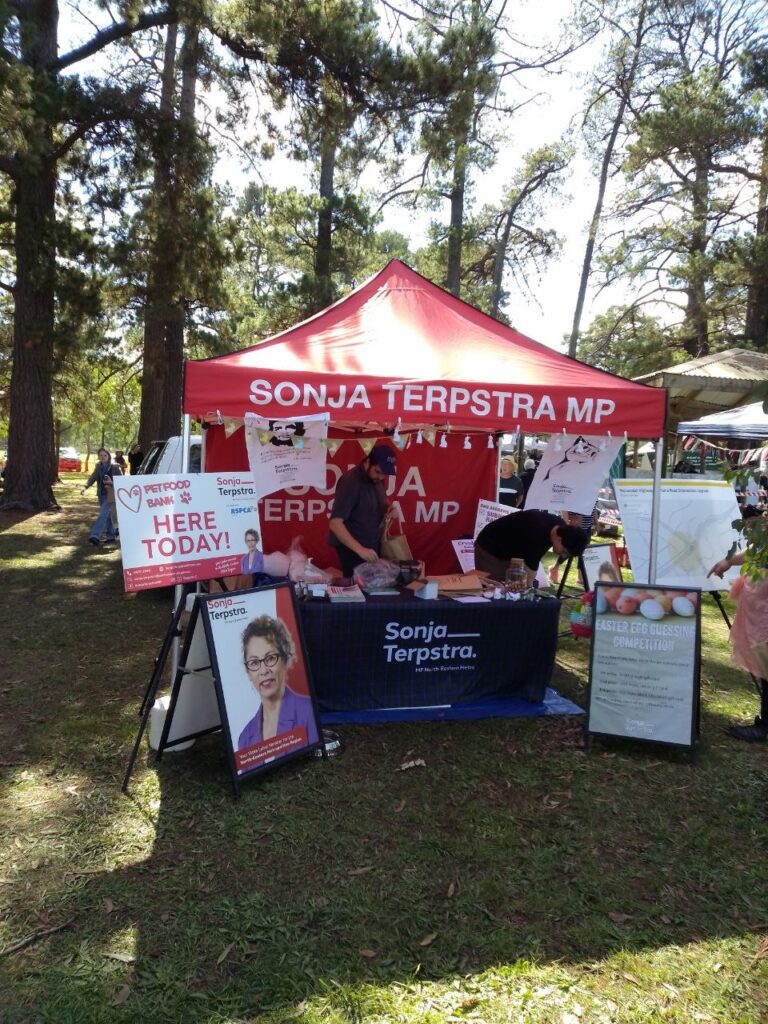
Not to sound too generic of a conservative here, but it is worth remembering: Communists are the enemy of all unique cultures and peoples (and particularly of Europeans), their ideology responsible for tens of millions of deaths and many atrocities, very much within living memory. To have a stall from who might be politely referred to as a ‘Labor Left’ MP venerating a notorious (non Scottish, or even Australian!) Communist would draw parallels to a clan tent having a portrait of Joseph Goebbels or perhaps an Oliver Cromwell: at best, this is completely irrelevant, you would at minimum ask why this figure is represented at all, and you would think that this MP would be thrown out of the festival for celebrating such a controversial figure! ‘Inspiring quotes’ can be found easily, without going after figures that aren’t even tangentially related to the event you are present at, let alone being far from a desirable role model.
There are other individual issues with different Games globally. One of these issues for example is the growing amount of clearly non European stock, a number most clearly represented by the pipe bands (usually school related). Failing strict racial requirements, there unfortunately isn’t really anything that a committee could even do about this sort of issue diluting the general experience of the Games. Given the world we live in, the best we could hope for is persuading these people that they are foreigners and that this culture is not for them to participate in, as well as shaming those who engage in this Cultural Capitulation. After all, not many people would authentically argue that an Indian or Chinese festival would be a richer experience if there was a large percentage of clearly identifiable non Indian or Chinese people: we’re just used to seeing this in the West. It would look and feel peculiar: you would be wondering why they replaced their own people in their own festivals!
While I have used the Scottish-Australian community as an example, there are many others in a similar boat, and we should be cautious about the same happening to our own (Nativist) created communities over time. For example, the desire to constantly expand the franchise of what can be considered a right thinking ‘Australian’ has led to a massive dilution in not just the quality, but also the quantity of longstanding authentic national organisations.
So what can our legitimate Australian communities do, in order to stave off capitulation and defeat? To name a few, they should:
1) Have an energetic and strong executive/committee, refusing capitulation at every turn.
2) If there are any necessary setbacks, ensure that they are temporary!
3) Encourage people to stand for positions of leadership, driving engagement and excitement for various individual activities, and the broader gatherings.
4) Do not accept defeatism or capitulation where you see it. Instead, be forward minded: if something isn’t working, you need to try harder, or try something different.
5) Commit to maintaining an Australian ethnic cohesion as much as possible, given the time and place we find ourselves in.
Thanks for reading, and hopefully you are more educated in the current state of cultural festivals, aware of some potential pitfalls for our own existing and upcoming communities, and more energised to get out there and fix some of these problems that we face!
Thomas M.
Governor – ANA Victoria
2025
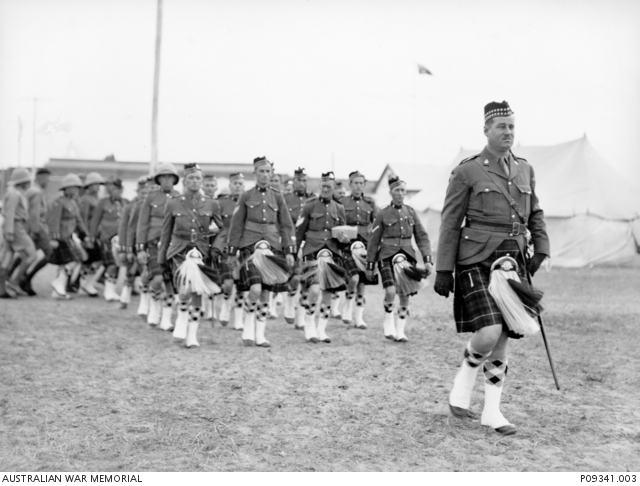
The South Australian Scottish Regiment, 1939